
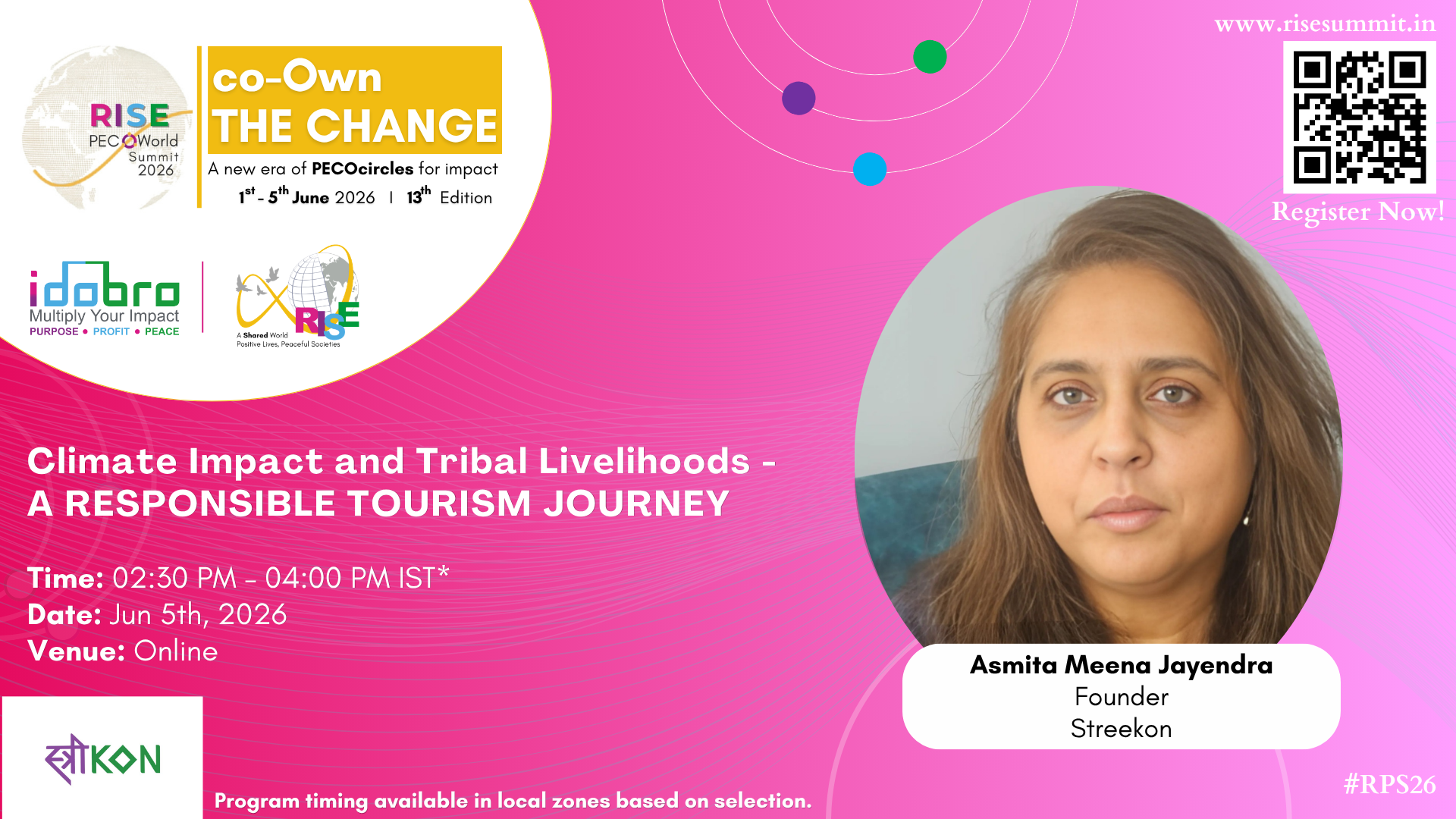
Climate Impact and Tribal Livelihoods - A responsible tourism Journey
Tribal communities stand at the absolute frontlines of environmental and climate disruption. Led by Asmita Meena Jayendra (Founder of Streekon) on 5th June 2026, this masterclass explores how decentralized economic models can protect the Katkari tribal ecosystem in Khalapur, Maharashtra, while building climate resilience. The session's core thesis: sustainable eco-tourism is not just a leisure industry, but a powerful strategic tool to diversify local incomes, preserve intangible heritage, and safeguard regional biodiversity under the summit's central vision, "Co-Own The Change". “We must move beyond charity. True resilience lies in training tribal women as eco-tourism leaders, transforming their traditional ecological wisdom into self-sustaining livelihoods.” The Intersection of Climate Vulnerability and Community Assets Indigenous tribes possess centuries of deep, localized ecological knowledge, yet they are often the most economically vulnerable to shifting weather patterns. This session highlights how responsible tourism can serve as a bridge. Rather than treating tribal clusters as passive subjects of regional development, the Streekon model positions them as the primary custodians of eco-friendly tourism tracks. By restructuring the local economy around low-impact, asset-based tourism, remote clusters can secure sustainable livelihoods while actively defending the biodiversity of their ancestral lands. Hands-On Innovation: The Workshop Segments The masterclass spotlighted several practical, scalable activities currently deployed to build local capacities and capture tourism value: 1. Circular Product Innovation Led by Geeta (Head of Training), this segment demonstrated practical ways to curb plastic waste in tourism clusters. Participants explored how to upcycle cardboard and banana leaves into durable plates and serving bowls, transforming local organic waste into high-utility, biodegradable alternatives. 2. Culinary Heritage Preservation Food represents a powerful vehicle for cultural exchange. The team showcased the preparation of Mango Modaks—utilizing seasonal, hyper-local ingredients like fresh mango pulp, jaggery, and rice flour. These traditional culinary items create memorable, authentic experiences for eco-tourists while supporting local agricultural networks. 3. Ethnobotanical Wisdom & Forest Ecology Shanu Pawar, a local tribal goat herder, shared an intimate look into the tribe’s daily coexistence with the forest. She detailed: Traditional Veterinary Medicine: Using specific forest plants—such as Palaash (Butea monosperma) flowers and wild leaves—to treat livestock ailments, bypassing expensive, chemically synthesized drugs. The Sourcing Journey: Trekking deep into the wilderness to harvest appropriate fodder, demonstrating how the community's primary livelihood depends directly on keeping the forest canopy intact. 4. Crafting Intangible Legacies Nidhi Patil walked participants through the traditional art of weaving venis (floral hair garlands) from the local Bhagara flower. Handed down across generations, this meticulous skill is transformed from a daily ritual into an interactive tourism craft, offering a dignified, supplementary source of income. Conclusion: Co-Owning the Change Alternative livelihood frameworks only succeed when they respect the dignity, agency, and inherent knowledge of the community. Asmita Meena Jayendra’s work demonstrates that when we integrate ecological protection with cultural celebration, we do not just save a landscape—we empower its people. The path forward for India's eco-tourism policies is clear: tribal communities should not merely be part of the landscape tourists come to see; they must be the CEOs of the experience. FAQ Who are the Katkari tribe, and why is this model focused on them? The Katkari are a vulnerable tribal community primarily located in parts of Maharashtra. Highly dependent on forest resources and physical labor, they are exceptionally vulnerable to climate-induced changes in the forest ecosystem. This model builds alternative economic safety nets directly where they are needed most. How does upcycling banana leaves and cardboard support the local economy? It establishes a local, low-cost circular economy. By training tribal women to produce biodegradable tableware from organic waste and recycled cardboard, the community reduces plastic pollution in their environment while generating direct sales revenue from eco-resorts, tourists, and local businesses. What role does traditional veterinary medicine play in forest conservation? When herders like Shanu Pawar rely on indigenous forest plants (like Palaash leaves) for livestock care, the economic value of the standing forest becomes clear. It incentivizes the community to actively protect biodiversity, as the health of their primary livelihood (livestock) is tied directly to the health of the wild flora.
Watch again