
The Real Agripreneurs: Seeing Farmers as Enterprise Leaders
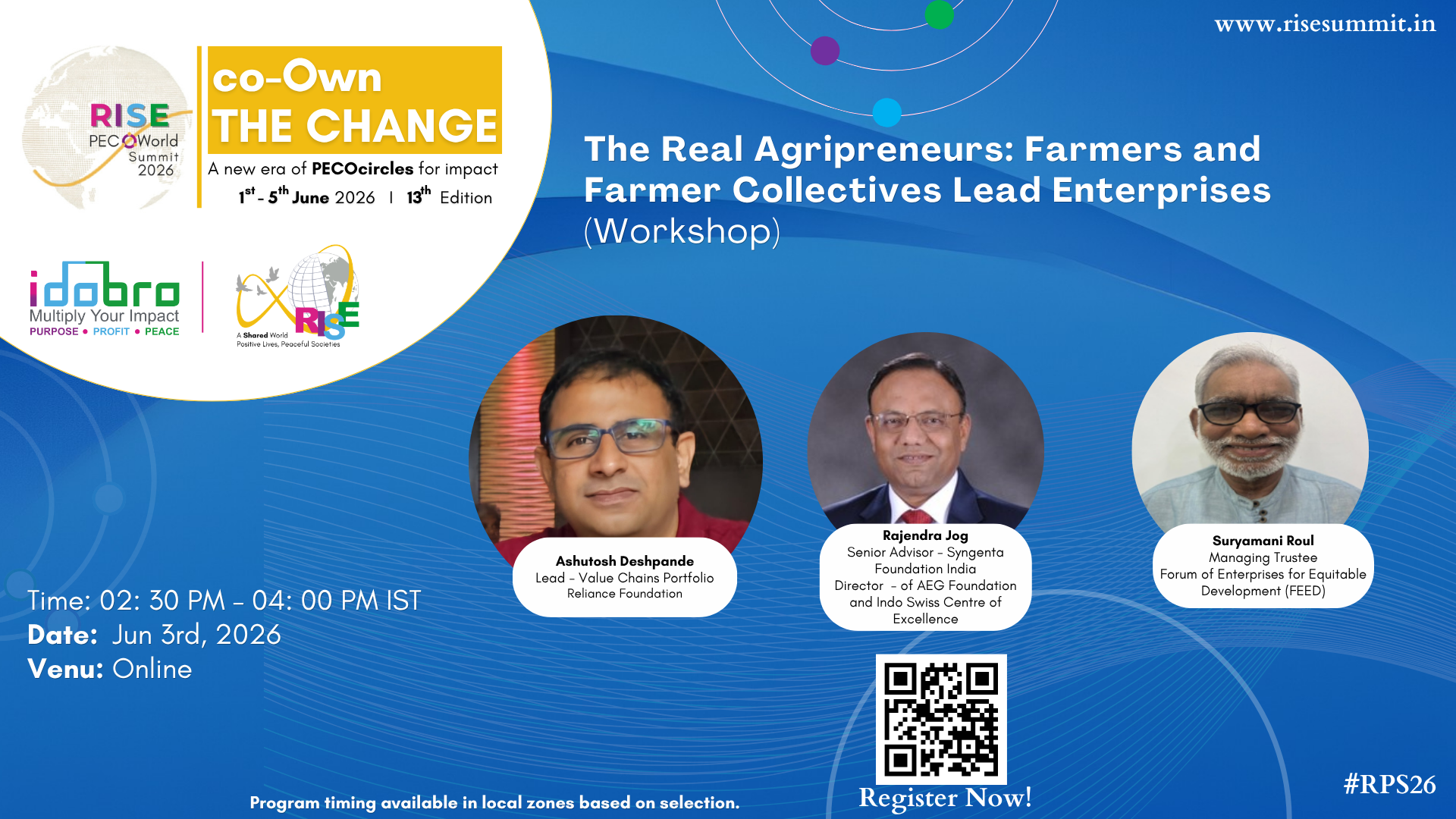
The Real Agripreneurs: Farmers and Farmer Collectives Lead Enterprises
Key insight
A Track 2 conversation reframing farmers and farmer collectives as entrepreneurs who manage risk, value chains, markets, finance and community resilience every day.
Linked summit sessions
The Real Agripreneurs session asked a deceptively simple question: why do we hesitate to call farmers entrepreneurs? Farmers make production decisions, manage uncertainty, negotiate inputs, handle climate risk, respond to prices, organise labour, protect assets and find markets. In many ways, they carry the full complexity of enterprise, but without the recognition, infrastructure and support that other entrepreneurs expect.
The conversation highlighted farmer collectives as a critical bridge. FPOs, cooperatives, self-help group federations and producer groups can help small producers move from isolated production to collective strength. They can improve bargaining power, access markets, aggregate produce, build processing capacity, share knowledge and create stronger links between rural producers and buyers. But collectives do not become enterprises automatically; they need governance, trust, market discipline and patient handholding.
A major shift discussed was from production-led thinking to market-linked enterprise. Farmers cannot be asked only to grow more. They need information about what the market values, how quality is assessed, how logistics work, how customer relationships are built, and how value addition can improve incomes. This includes soft skills as much as technical skills: negotiation, record keeping, customer handling, packaging, communication and confidence.
What to carry forward
- Farmers already manage enterprise-level risk and deserve enterprise-level support.
- Collectives need governance, trust and market capability, not only registration.
- Youth and women can reshape agriculture when aspiration and ownership are taken seriously.
The session also made space for women and youth in agripreneurship. Women often carry significant agricultural labour and knowledge, yet remain under-recognised in ownership and decision-making. Youth may be more willing to experiment with technology, branding, processing and direct market channels if agriculture is seen as enterprise rather than fallback. Supporting them means investing in aspiration, not only productivity.
For the PECOWorld journey, agripreneurship sits at the intersection of cause, community and county. Food systems, climate resilience, rural livelihoods and local economies are all deeply place-based. The opportunity is to build PECOCircles and PECONets around specific agricultural themes, regions and communities, so that farmers, mentors, buyers, technology providers, CSR teams and policy actors can collaborate around real enterprise needs.